

 sales@agilitz.com

Set an attribute-based base price
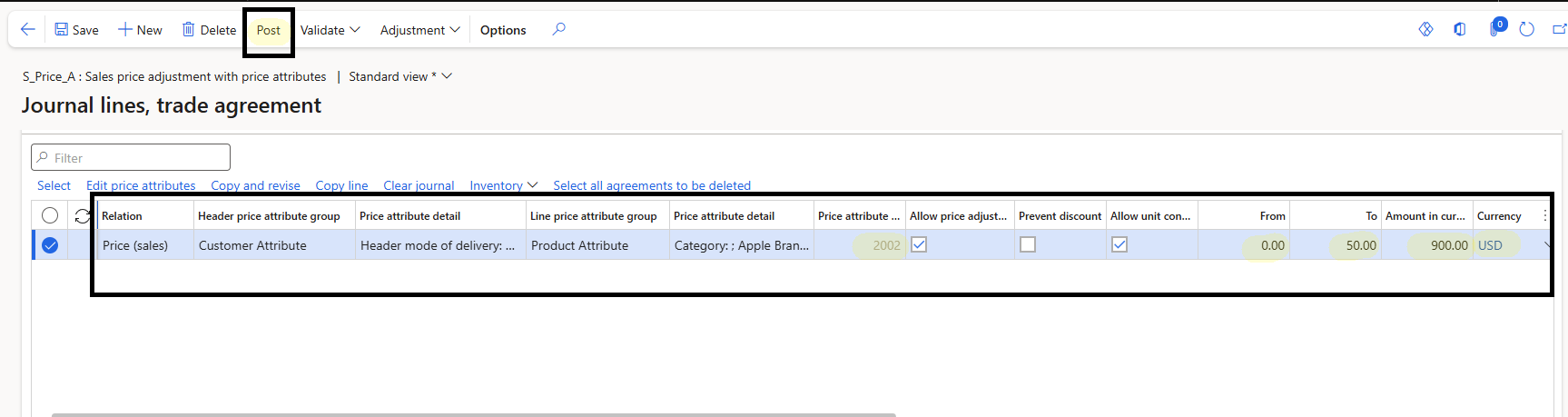
The example applies a USD 900 unit price to a sample product for a specified customer group and standard delivery mode. Create the sales trade agreement journal, define the header and line attribute conditions, enter the price and post the journal.
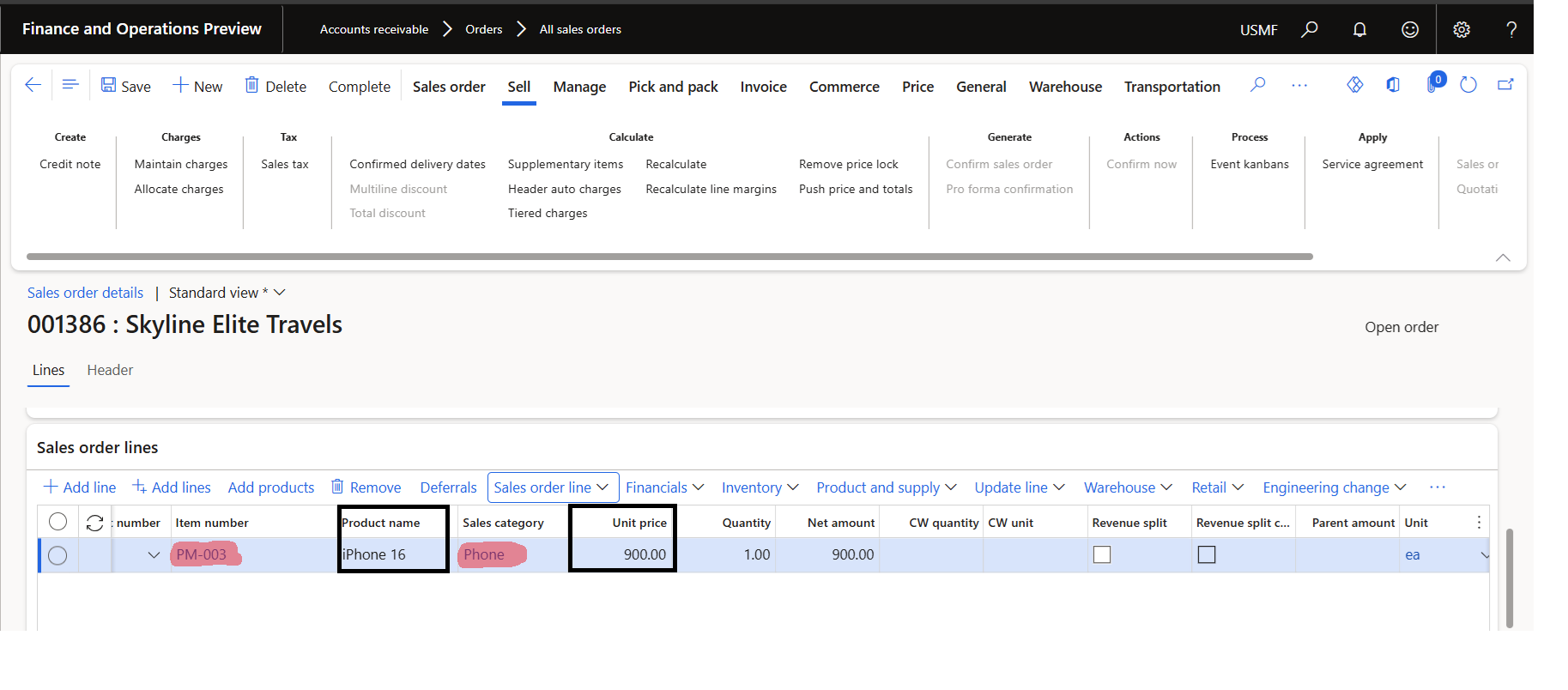
Create a qualifying sales order and add the product. Check the unit price and open the line’s price details. Repeat the test with a different customer group or delivery mode to confirm that the rule does not apply too broadly.
Apply a 10 percent markup
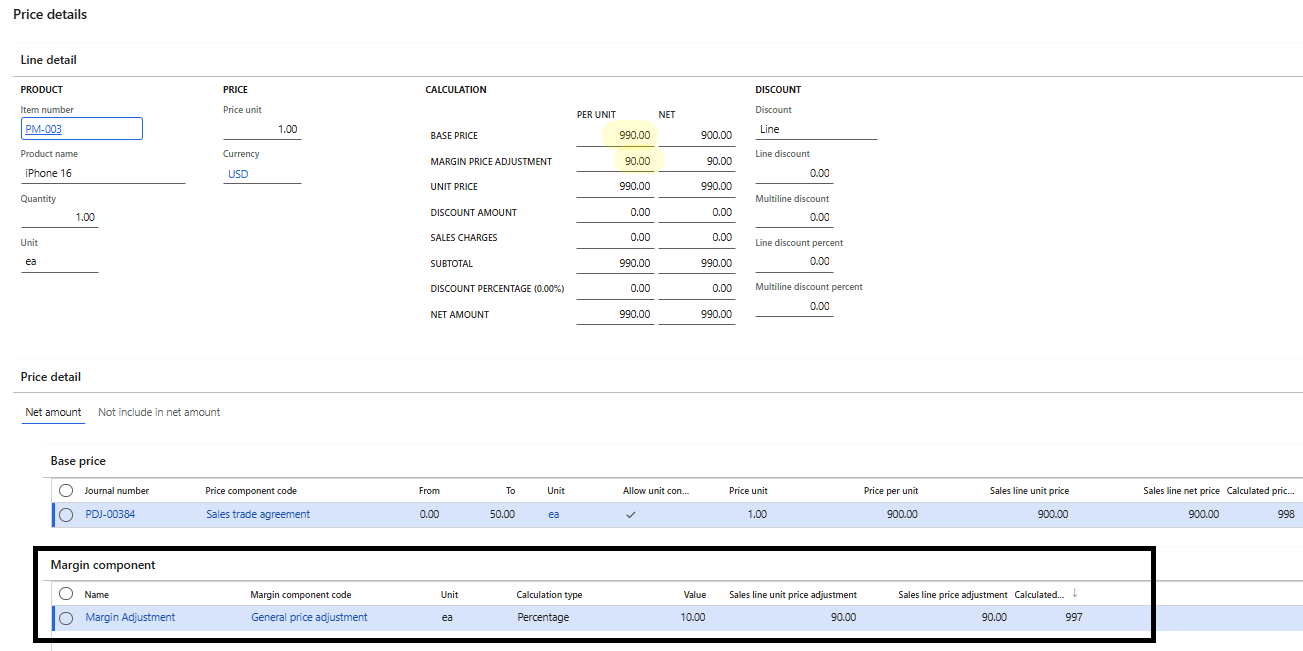
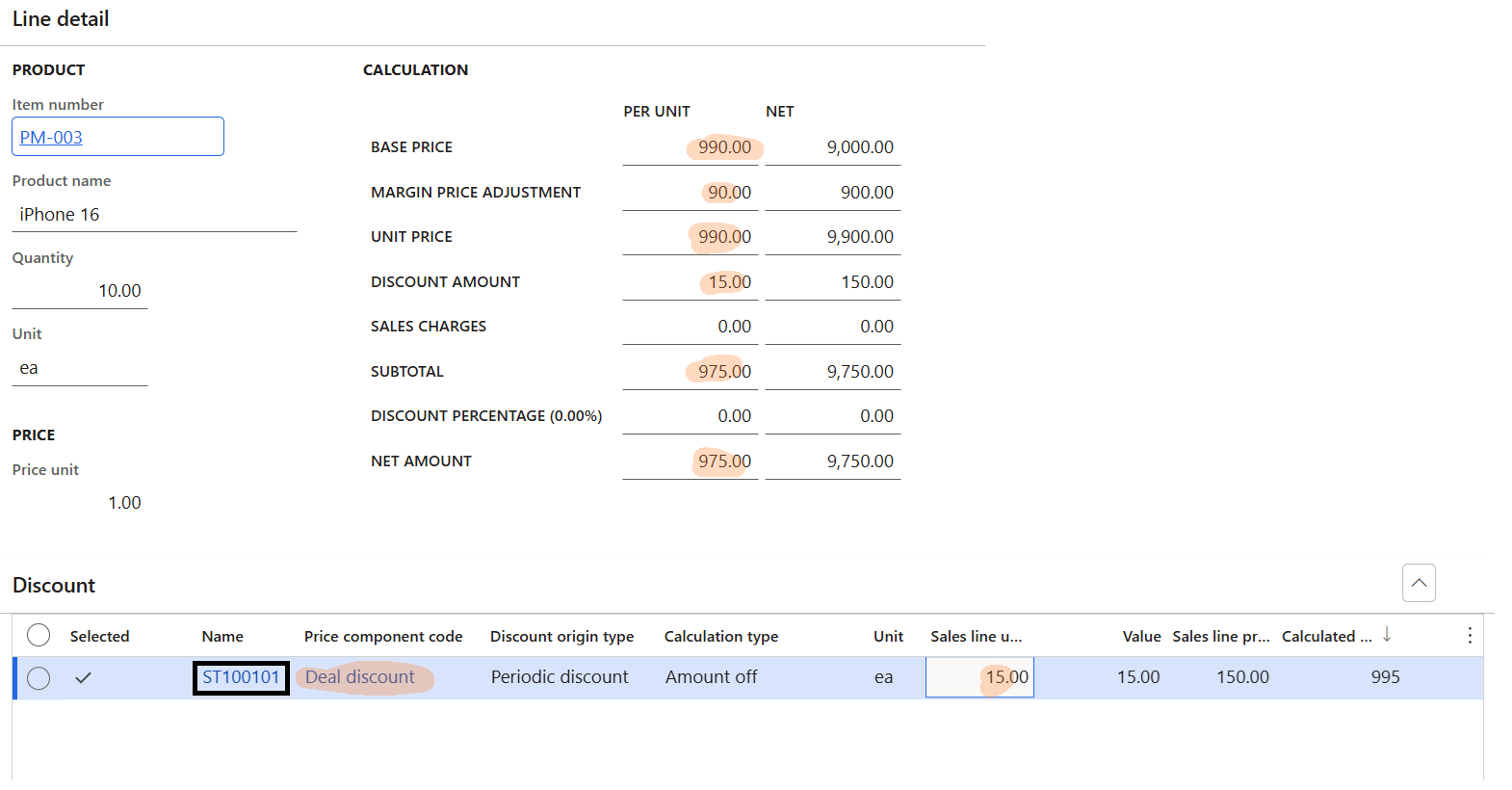
The next rule adds a 10 percent adjustment when the order also meets the configured regional condition. With a USD 900 base, the illustrative result is USD 990 before further discounts or charges.
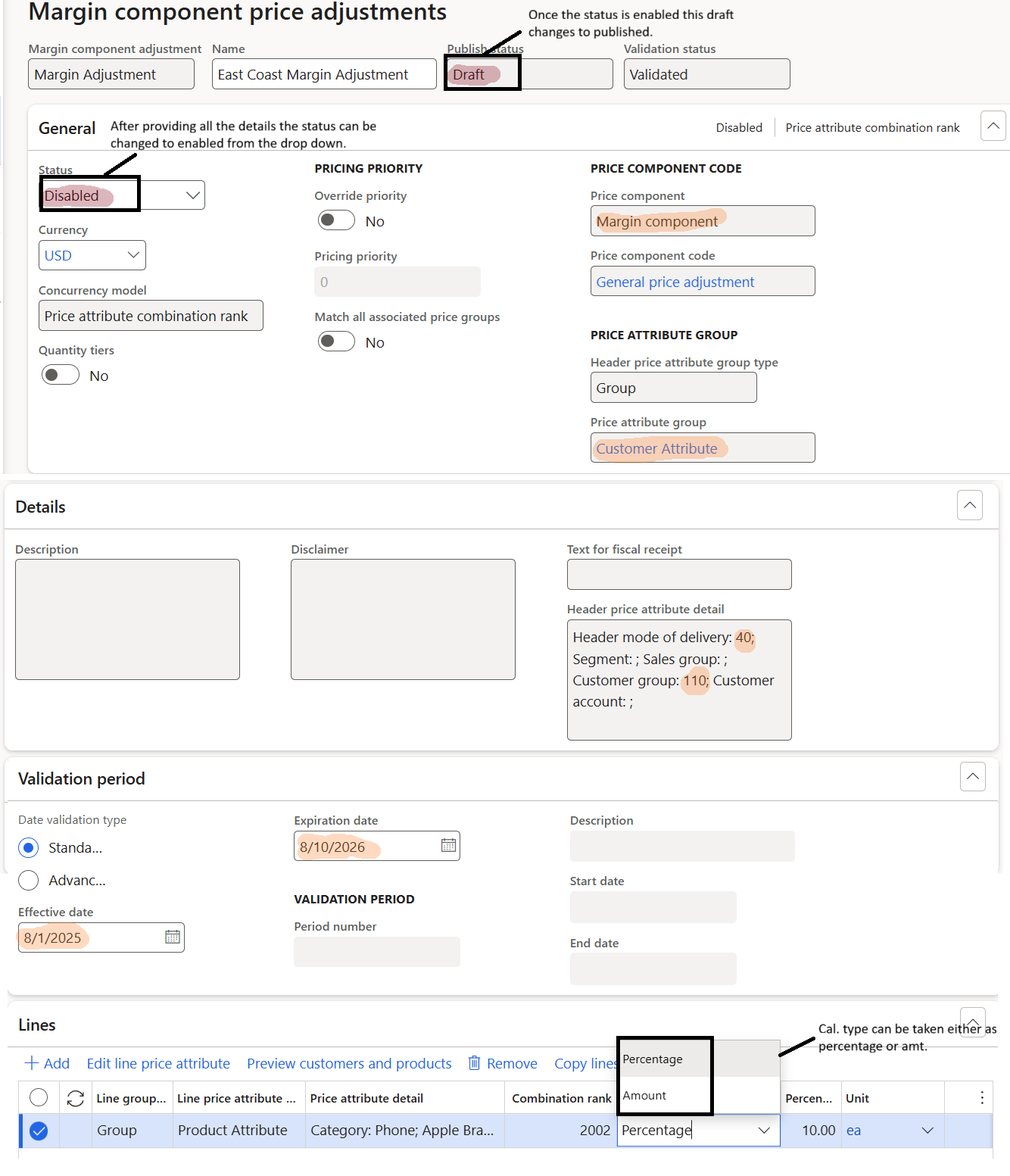
In this example, “10 percent” is a markup on the base price. It is not a statement that the order has a 10 percent gross margin. Check the calculation basis and confirm that the trade agreement permits the adjustment.
Apply a quantity discount
A quantity discount gives USD 15 off each unit when the qualifying order quantity reaches 10. Configure the quantity threshold and the customer or delivery conditions, then test quantities immediately below and at the threshold.
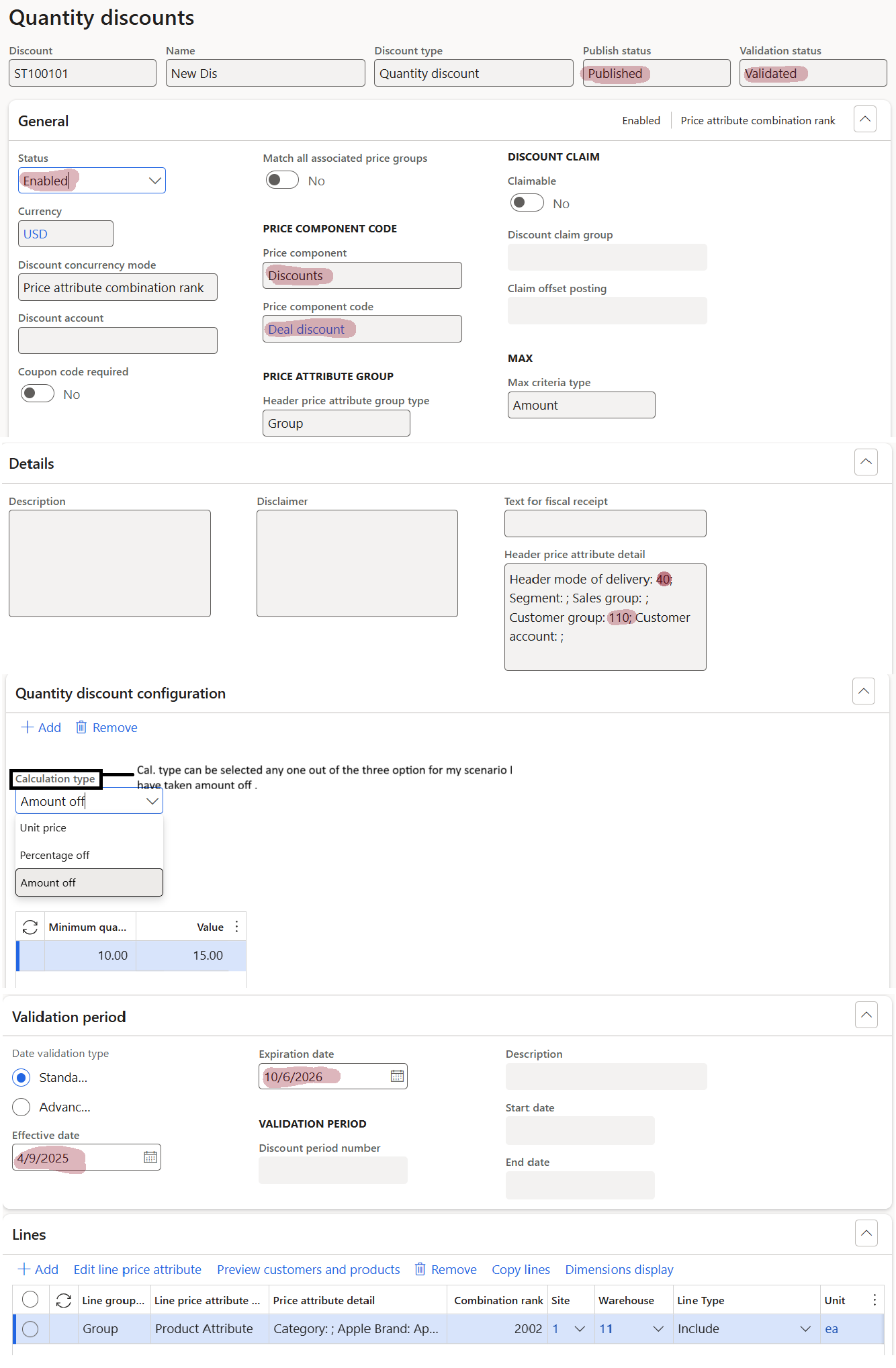
Where the USD 990 adjusted price and the USD 15 per-unit discount both apply, the illustrative net unit price is USD 975. At 10 units, the discount totals USD 150 and the line value is USD 9,750 before tax and other charges.
Turn the examples into acceptance tests
- Check 9, 10 and 11 units rather than only the threshold quantity.
- Use both eligible and ineligible customer attributes.
- Confirm currency, unit, effective dates and delivery conditions.
- Explain every applied component through price details.
- Retest after changing concurrence settings or the price tree.
A pricing design is easier to support when users can explain why a rule applied and which condition prevented another rule from applying. Keep that evidence with the configuration decisions.
Further reading
For current feature availability, prerequisites and detailed configuration, refer to Microsoft Learn.
Screenshots and scenarios are illustrative. Interface labels and available features can vary by application version and environment.