

 sales@agilitz.com

Build on the right pricing model
Unified pricing management supports attribute-based pricing and configurable price components. It still uses sales trade agreement prices; it should not be described as removing trade agreements altogether. The treatment of existing prices and competing rules depends on the pricing parameters.
Start by documenting the business decisions: who qualifies, which products are included, when a rule applies and how it interacts with other adjustments. A consistent configuration is easier to maintain when these decisions are explicit.
Understand price components
- Base prices provide the starting value.
- Margin component adjustments apply configured increases or decreases.
- Discounts support qualifying offers and quantity conditions.
- Charges add relevant fees.
- Rebates are handled through the applicable rebate capabilities and setup.
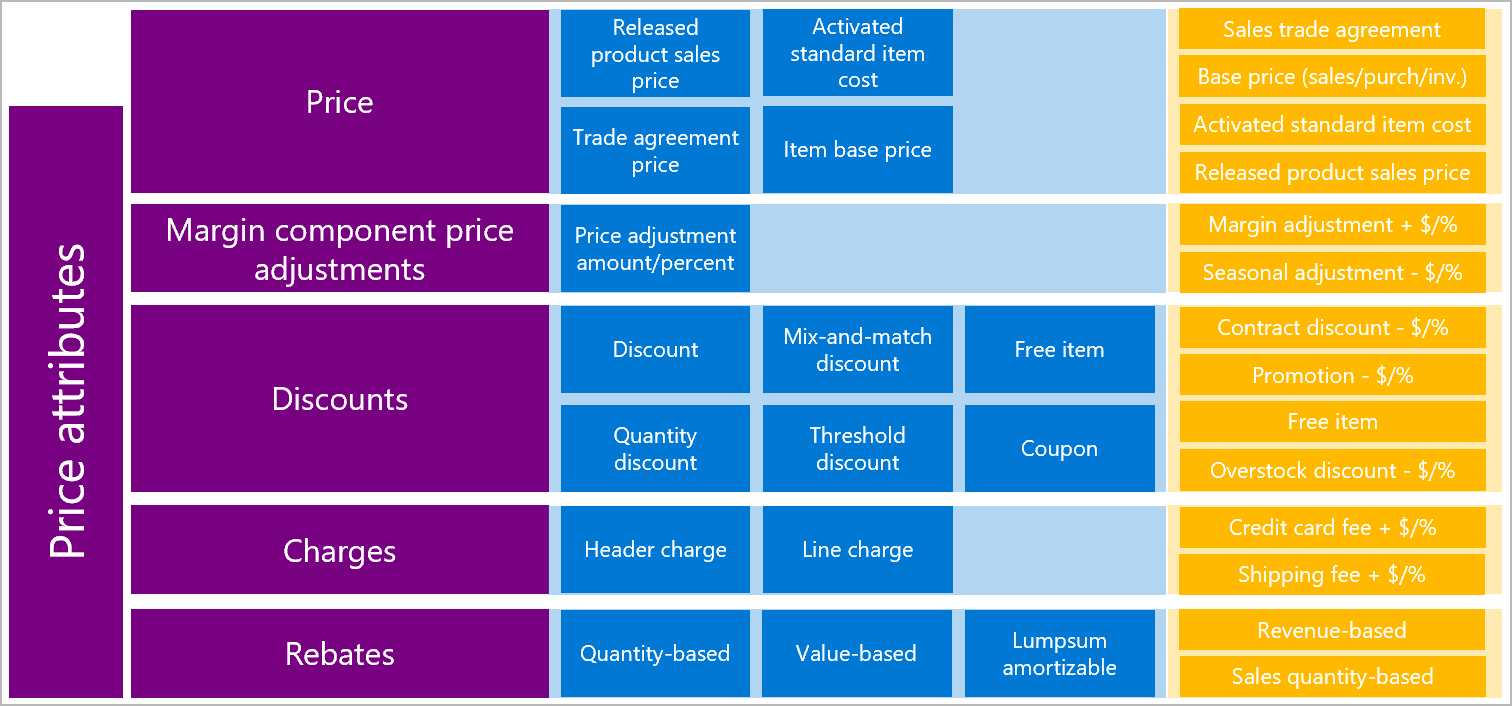
A price tree arranges the components used in a calculation. The sequence and concurrence rules matter: a base price, a markup and a discount cannot be understood in isolation if all three can apply to the same line.
Use attributes to express eligibility
Price attributes describe conditions associated with products, customers, sales orders and order lines. For example, an electronics wholesaler may price a product differently for a particular customer group, delivery mode or region.
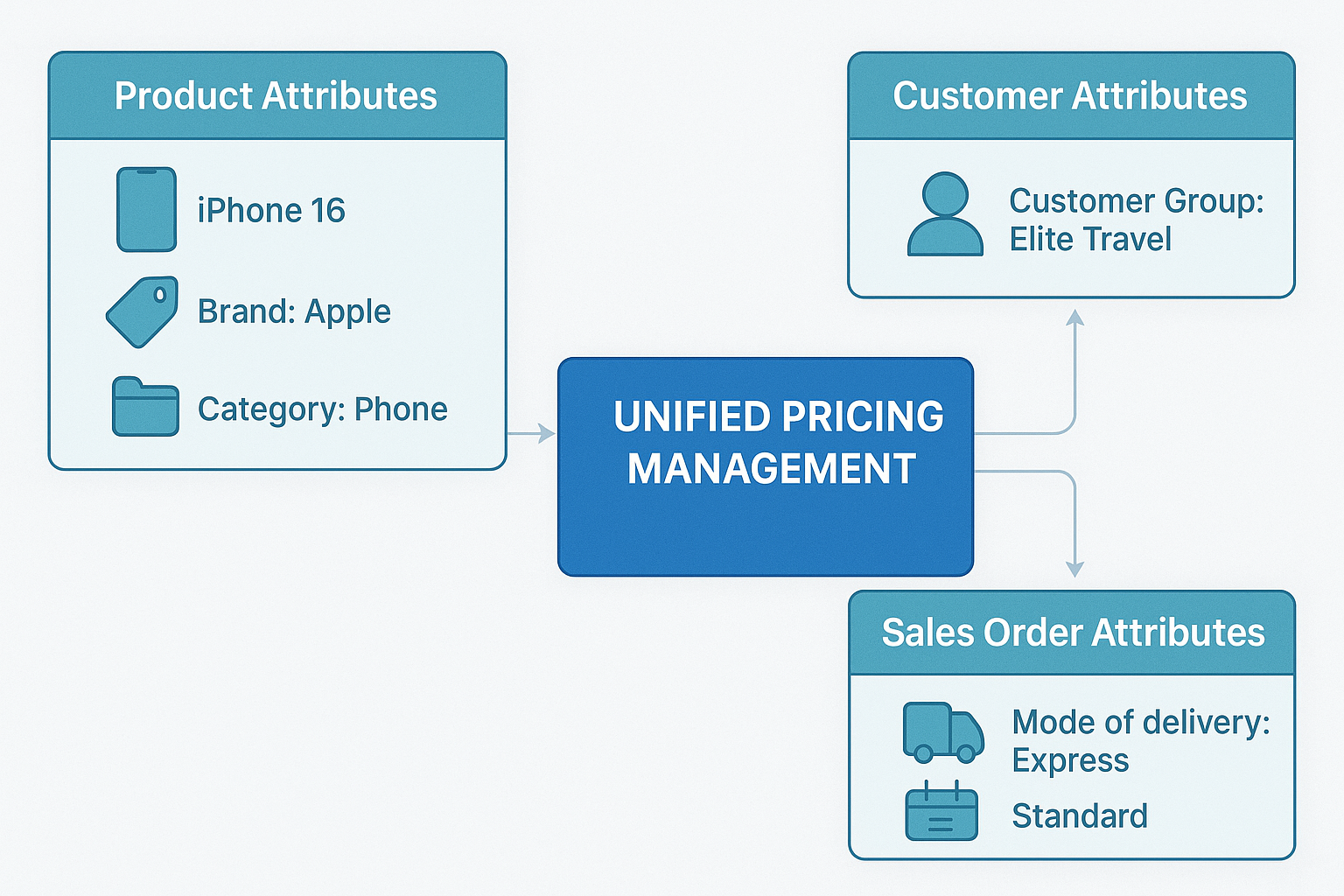
Group the attributes at the appropriate header or line scope. Rank settings help resolve competing conditions, but the result also depends on the broader pricing configuration. Test the full combination rather than treating rank alone as the final decision.
Plan three practical tests
- An attribute-based trade agreement price sets a qualifying product to USD 900.
- A qualifying 10 percent markup increases that base to USD 990.
- A quantity discount reduces the price by USD 15 per unit when its threshold and other conditions are satisfied.
Part 2 connects attributes, groups, component codes and the price tree. Part 3 tests the scenarios on sales orders and uses price details to explain the outcome.
Further reading
For current feature availability, prerequisites and detailed configuration, refer to Microsoft Learn.
Screenshots and scenarios are illustrative. Interface labels and available features can vary by application version and environment.